Most evaluations of AI-powered revenue tools go sideways before they start. The demo looks great. The vendor says all the right things. The pricing fits the budget. And six months after go-live, you’ve got cleaner dashboards sitting on top of the same broken data.
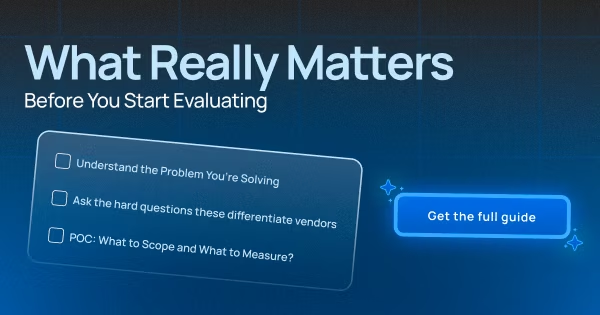
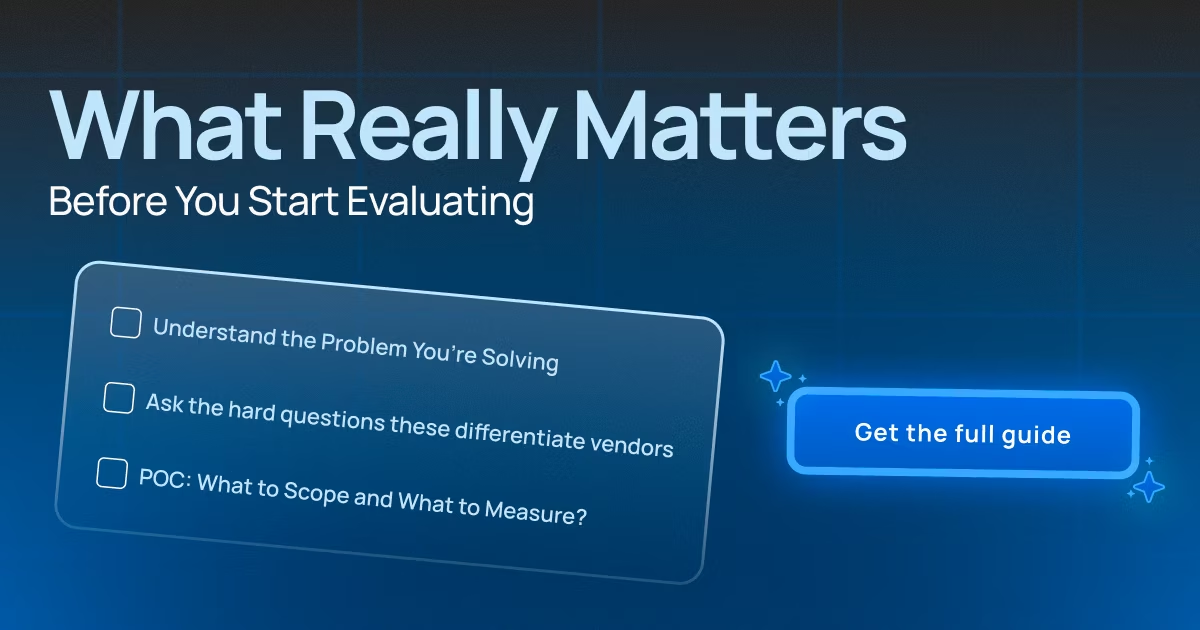
This guide is designed to help you avoid that. It’s organized around the questions that actually determine whether this kind of technology investment works, not the ones that make for a good slide deck.
One thing upfront: this guide tilts toward solutions that solve the data capture problem first. That’s intentional. In our view, any AI applied to incomplete activity data produces confident nonsense — and it’s worth being specific about what that means. If your CRM reflects only what reps remembered to log, your AI is reasoning on a curated, partial version of reality. It will produce outputs that look precise and authoritative. Those outputs will be wrong in ways that are hard to detect, because the system has no way to flag what it doesn’t know.
A forecasting model that can’t see 40% of a rep’s activity will still give you a confidence score. It just won’t be a trustworthy one. The most important question you can ask any vendor is: where does your data come from?
Get the Full Guide

Related Resources
Continue exploring AI strategies, sales methodologies, and go-to-market insights with these hand-picked resources.