
It’s that time again, the dreaded quarterly review. You’ve missed your number by more than you’re comfortable to admit and you know this time heads will roll. So, how do you survive forecasting without losing yours?
A recent People.ai poll on LinkedIn revealed how sales teams really feel about their forecasting confidence. Of those that participated, the majority ruled that their forecasting process could use a lot of work. It’s no surprise. Traditional forecasting is incredibly complicated, and if you’re honest, steeped in guesswork.
Prepping for a forecasting call means that most of your day is filled with chasing down reps for updates, sifting through story times you didn’t sign up for, and jumping from one spreadsheet to another to try and patch together a narrative. It’s exhausting, and worse, it’s fruitless.
But we have news for you, all of that ends now.
We’ve reimagined sales forecasting from the ground up and built a product designed for how modern sales orgs actually work: fast, intelligent, and in constant motion. Powered by real-time activity data, AI-driven insights, and a unified workspace, People.ai gives your team full pipeline visibility for every single deal.
It’s not just forecasting. It’s your new revenue operating system. To prove it, we’re sharing the 6 ways you can redefine forecasting for the better.
1. Unified Workflows Instead of Scattered Data
Sales orgs are constantly evolving—but forecasting rituals haven’t kept up. Leaders bounce between CRMs, spreadsheets, and chat threads just to prepare for a single forecast call. It often results in wasted time that could be spent working directly with customers.
With People.ai, your forecasting summary isn’t just glorified activity data, it’s the truth. We’ve unified forecasting and pipeline management in one place so you can grab quick insights and keep deals moving. Agents analyze real-time engagement data to fill in the blanks so you can validate deal health, uncover risk, and get a full, unbiased overview for every deal. Prepare for forecasting calls in minutes, not hours, giving you more time leading your team and less time hunting for information. It’s a forecast that works for you–not the other way around.
2. Proactive Forecasting Instead of Reactive
Many sales teams rely on tools that only capture pieces of the puzzle—conversation intelligence from calls, aggregated pipeline data from CRM, or basic number roll-ups—leaving critical gaps in the complete picture. But those surface-level insights don’t tell the full story—and they’re not enough to call a forecast with confidence. You need complete, trustworthy data and the ability to turn that data into action.
We’ve spent over a decade perfecting a system that automatically captures and matches key deal activity like meetings, emails, calls, chats, and more. Because your AI is only as good as the data you train it with. This data is the foundation for how AI identifies risks and recommends next steps. That means your reps aren’t stuck logging data, they’re freed up to focus on closing deals.
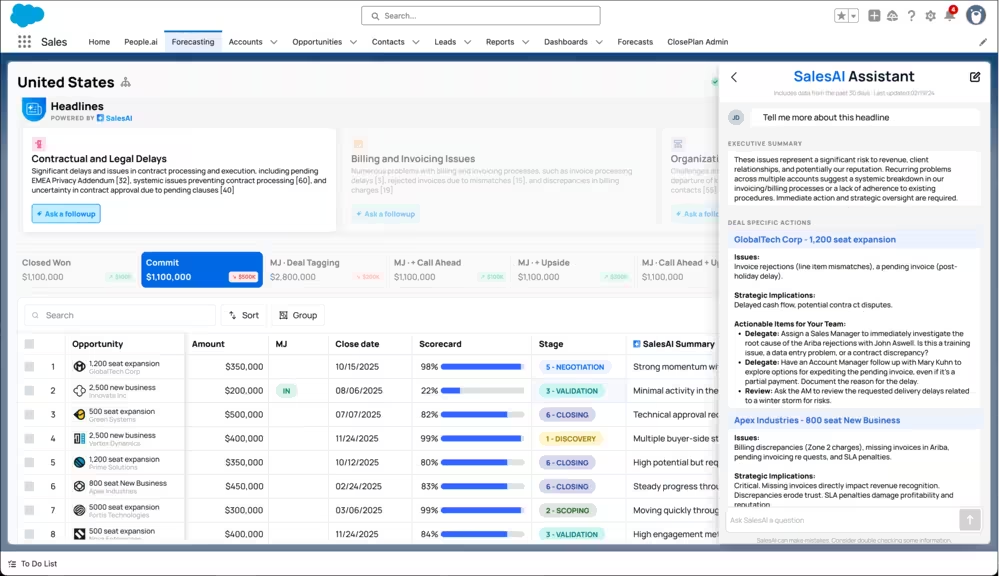
When every decision is grounded in reality, forecasting stops being a report and becomes a competitive advantage. With People.ai, it becomes a powerful tool to drive performance. Get live insights that go far beyond stage progression. See whether a deal is properly multi-threaded, whether you're engaged at the right levels and departments, and if buyer activity is strong enough to move the deal forward. Combine that with risk alerts and you’ve got a forecast you can trust and act on.
3. Real-Time Alerts Instead of Post-Mortems
Don’t wait for a quarter-end post-mortem to realize what went wrong. By then, it’s too late to recover lost deals—or the number.
With Headlines you get proactive alerts on the biggest risks and trends impacting your forecast—starting as early as Q1. Whether it’s stalled buyer engagement, delays in legal or procurement, or slipping close dates, Headlines identifies the issues that quietly derail deals and quantifies the potential impact in real revenue terms. You’ll get clear signals about what’s at risk and why.
Sales leaders gain a high-level view of what’s going sideways—across teams, regions, and segments—with the ability to drill down into specific deals and take action where it matters most. From targeted coaching to strategic interventions, you’re equipped to step in early and keep deals from slipping through the cracks.
Because course-correcting in real time is a lot more powerful than explaining what went wrong after the quarter’s already closed.

4. Automated Deal Qualification Instead of Manual Input
Qualification scorecards aren’t just another checklist. They’re an intelligent layer of deal context that fuels stronger pipeline accuracy. And for many reps, filling them out feels like busywork—time-consuming and designed more for inspection than impact.The result? Incomplete data, abandoned methodologies, and inaccurate forecasts.
Our platform analyzes deal history to automatically complete scorecards so your team gets an accurate view of deal strength, gaps, and weaknesses–all aligned to your methodology. That means cleaner pipeline data, stronger forecasts, and scalable qualification.
5. Self-Service Customization Instead of Generic Solutions
Most forecasting tools on the market are rigid and limited when it comes to customization. They force sales teams into a one-size-fits-all model that rarely reflects how your organization actually works—leaving you with disconnected workflows and tools that don’t scale with your process.
At People.ai, we understand that every sales team has its own rhythm, rituals, and structure—and your forecasting platform should adapt to that, not the other way around. That’s why we’ve built in the flexibility to customize forecasting to fit the way your team operates, no engineering support needed.
Implement what you need for your team to succeed quickly and easily. Tailor table views and submission workflows to align with your established processes. Build and manage custom hierarchies, user roles, and permission sets, so each user sees the right information at the right time.
Whether you're managing a complex global team or a lean regional org, you’ll get a forecasting experience designed to flex around your business.
6. Transparency Instead of Smoke and Mirrors
AI-powered forecasting fails when you can't understand or trust how it reaches its conclusions. Too often, sales teams are left in the dark—unsure how scores are calculated or why certain deals are flagged as risky.
People.ai takes a different approach. Our models are built with transparency in mind, so sales leaders and reps alike can understand the why behind every score, recommendation, and alert. That clarity builds trust, drives adoption, and ensures your team can take action with confidence—because they know exactly what the data is telling them.
Forecasting for the Future
Forecasting doesn’t have to be a painful, manual ritual. With real-time data, proactive insights, and AI doing the heavy lifting, your revenue team can stop guessing and start executing.
Dare to forecast differently with a unified workspace, zero surprises, and a forecast you can finally trust.
Get started on better, smarter forecasting and take a self-led tour.
Related Insights
Explore more expert insights on AI adoption, sales execution, and revenue intelligence to help your team close more deals with confidence.

![2023 AI Recap: A Year of Innovation, Adoption, and Growth [AI Stats]](https://cdn.prod.website-files.com/6891c0e104de70359fa82057/6892141b24ba4c81900bf23a_68342fd15983e655745c4cf6_2023%2520Ai%2520Recap%2520A%2520Year%2520Of%2520Innovation%2520Adoption%2520And%2520Growth%2520Ai%2520Stats%2520(1).avif)