October 1, 2025

Your Pipeline is Full of Lies (And You Know It)

Jillian Pedersen
Your Pipeline is Full of Lies (And You Know It)

Table of Contents

We’ve all been there before: the deals that feel the most promising fall away, reps stories grow increasingly optimistic, and you keep missing your forecast. And while your team wastes time on risky opportunities, real deals slip through the cracks. The culprit? An overinflated pipeline. 

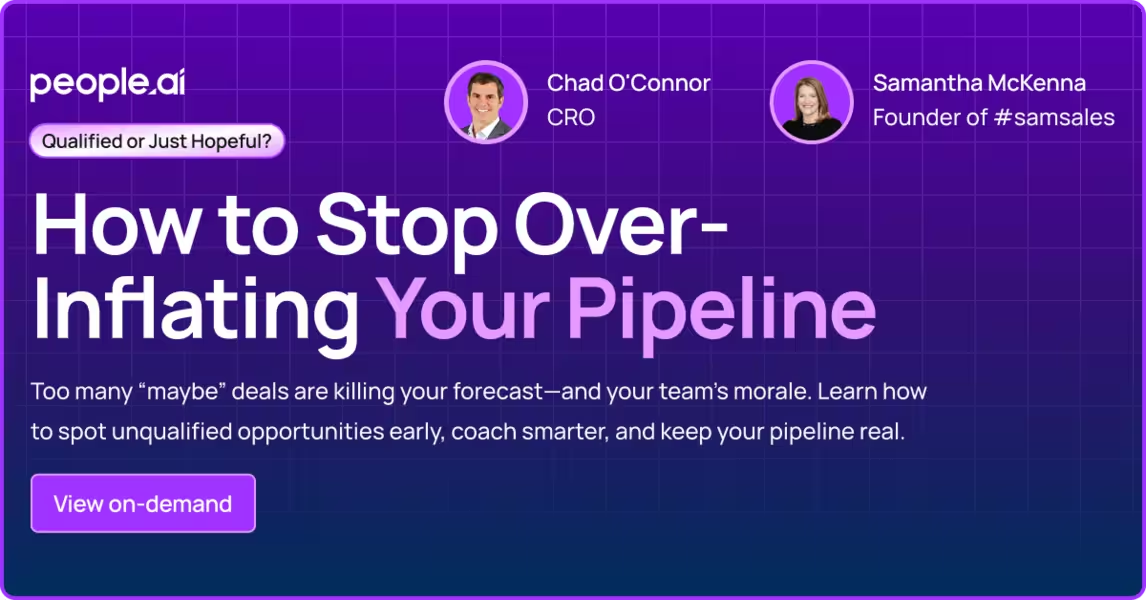
We recently sat down with Sam McKenna, founder and CEO of SamSales, and Chad O’Connor, CRO at People.ai to talk about the elephant in every sales leader's room: the overinflated pipeline that's making you look like a hero in your Monday meetings and want to run and hide when the quarter closes.

Here’s a closer look at three key takeaways from their conversation with insights that can help you build a pipeline you can trust.

1. Stop Playing With Fake Deals

One of the biggest challenges in today’s sales environment is that reps often hold onto deals that will never close. Why? Because finding opportunities has never been harder. The economy is tough, decision-makers are more elusive, and the path from create to close is longer and more complex than ever. Chad put it plainly:

“It's so hard in this economy to prospect, to get an actual conversation, to book a meeting, to actually find a prospect that wants to engage with you and really solve a problem.”

The result is that reps often inflate their pipeline with “maybe” deals just to rise to internal expectations or feel some sense of control over an unpredictable process. But the consequences of holding on to these deals are all too real- inaccurate forecasts, wasted time, and lost opportunities. Sam summed it up:

“We hang on to those opportunities because it's so hard to find new ones. Sometimes we just want to hide behind an inflated pipeline instead of being a little bit honest with ourselves, a little bit honest with our leadership.”

By cutting dead weight from the pipeline, reps gain the ability to double down on winnable opportunities, accelerate real deals, and drive a more predictable path to revenue.

2. Give Up the Gut Checks

Sales teams today have access to a massive tech stack, and as a result, more data than they know what to do with. The problem is that too much of this data is spread across multiple tools like your CRM, spreadsheets and meeting transcripts. Instead of clarity, scattered data creates confusion, forcing leaders to dig through multiple systems just to understand the status of a deal.

This chaos breeds dependence on gut instinct. It’s the default because it’s often faster and easier, but it comes with its own set of problems. Chad pointed this out with an eye-opening stat from Gartner: 

“I read a quote from Gartner where they said only 7% of leaders are actually forecasting accurately.”

Sam further illustrated how reliance on intuition can be misleading:

“ The hidden cost of those maybe deals is not only our mindshare, but then our brand is being eroded. ”

The solution starts with unifying and simplifying the data to give it context and make it actionable.That context is key and AI can help bring it to the surface. It adds a layer of intelligence by surfacing important signals, highlighting risks, and giving you strategic next steps. This shift takes your team from a reactive state to a proactive one.

Chad explained what happens when your sales process is data-driven: 

“Start trusting the AI data. Start taking actions on the data to overcome the objections. We have customers coming back saying 53% percent of deals when we do that are closing. I had a customer that said it got up as high as 75%.”

AI cuts through the noise, revealing the deals worth pursuing and giving reps the power to drive real, measurable results.

3. Coach With Discipline and Intent

Here's an uncomfortable question: When was the last time you actually coached someone instead of just demanding they update their forecast?

Data is even more powerful when leaders use it to coach their teams effectively, using questions and actionable metrics rather than judgment. Sam explained:

 “So many frontline managers, one, don't get coaching on how to coach. But, two, they don't  understand how to have a difficult conversation.” 

But coaching is often missing entirely. Sam highlighted this key challenge:

“I look at what Pam Dunn just said. Only 13% of sales reps say that they get any coaching. What a red alert for us.”

This lack of structured training makes it even more important for leaders to be intentional in their coaching approach. Sam added practical advice for reps and managers alike:

“I present some questions that lead them to the answers and help me coach them. Every coaching conversation I have, every difficult conversation I have starts with a question. I want to take their temperature first. I want to know what’s going on.”

Getting the full story opens the door to introduce the right action into the mix. Integrating real data with intentional coaching allows teams to standardize best practices and consistently mark more opportunities closed one.

Take Control of Your Pipeline Before It Controls You

Your pipeline is lying to you. Your reps know it. You know it. The only question is, what are you going to do about it?

Use your data like the weapon it is. And for the love of quota, start actually coaching your team.

A healthy pipeline isn't built on hope and optimism. It's built on honesty, discipline, and the guts to kill deals that deserve to die.

Ready to get honest? Watch the full webinar with Sam McKenna and Chad O’Connor to get the complete playbook for building a pipeline you can trust.

Because the next time you present your forecast, wouldn't it be nice to actually believe it?

We’ve all been there before: the deals that feel the most promising fall away, reps stories grow increasingly optimistic, and you keep missing your forecast. And while your team wastes time on risky opportunities, real deals slip through the cracks. The culprit? An overinflated pipeline. 

We recently sat down with Sam McKenna, founder and CEO of SamSales, and Chad O’Connor, CRO at People.ai to talk about the elephant in every sales leader's room: the overinflated pipeline that's making you look like a hero in your Monday meetings and want to run and hide when the quarter closes.

Here’s a closer look at three key takeaways from their conversation with insights that can help you build a pipeline you can trust.

1. Stop Playing With Fake Deals

One of the biggest challenges in today’s sales environment is that reps often hold onto deals that will never close. Why? Because finding opportunities has never been harder. The economy is tough, decision-makers are more elusive, and the path from create to close is longer and more complex than ever. Chad put it plainly:

“It's so hard in this economy to prospect, to get an actual conversation, to book a meeting, to actually find a prospect that wants to engage with you and really solve a problem.”

The result is that reps often inflate their pipeline with “maybe” deals just to rise to internal expectations or feel some sense of control over an unpredictable process. But the consequences of holding on to these deals are all too real- inaccurate forecasts, wasted time, and lost opportunities. Sam summed it up:

“We hang on to those opportunities because it's so hard to find new ones. Sometimes we just want to hide behind an inflated pipeline instead of being a little bit honest with ourselves, a little bit honest with our leadership.”

By cutting dead weight from the pipeline, reps gain the ability to double down on winnable opportunities, accelerate real deals, and drive a more predictable path to revenue.

2. Give Up the Gut Checks

Sales teams today have access to a massive tech stack, and as a result, more data than they know what to do with. The problem is that too much of this data is spread across multiple tools like your CRM, spreadsheets and meeting transcripts. Instead of clarity, scattered data creates confusion, forcing leaders to dig through multiple systems just to understand the status of a deal.

This chaos breeds dependence on gut instinct. It’s the default because it’s often faster and easier, but it comes with its own set of problems. Chad pointed this out with an eye-opening stat from Gartner: 

“I read a quote from Gartner where they said only 7% of leaders are actually forecasting accurately.”

Sam further illustrated how reliance on intuition can be misleading:

“ The hidden cost of those maybe deals is not only our mindshare, but then our brand is being eroded. ”

The solution starts with unifying and simplifying the data to give it context and make it actionable.That context is key and AI can help bring it to the surface. It adds a layer of intelligence by surfacing important signals, highlighting risks, and giving you strategic next steps. This shift takes your team from a reactive state to a proactive one.

Chad explained what happens when your sales process is data-driven: 

“Start trusting the AI data. Start taking actions on the data to overcome the objections. We have customers coming back saying 53% percent of deals when we do that are closing. I had a customer that said it got up as high as 75%.”

AI cuts through the noise, revealing the deals worth pursuing and giving reps the power to drive real, measurable results.

3. Coach With Discipline and Intent

Here's an uncomfortable question: When was the last time you actually coached someone instead of just demanding they update their forecast?

Data is even more powerful when leaders use it to coach their teams effectively, using questions and actionable metrics rather than judgment. Sam explained:

 “So many frontline managers, one, don't get coaching on how to coach. But, two, they don't  understand how to have a difficult conversation.” 

But coaching is often missing entirely. Sam highlighted this key challenge:

“I look at what Pam Dunn just said. Only 13% of sales reps say that they get any coaching. What a red alert for us.”

This lack of structured training makes it even more important for leaders to be intentional in their coaching approach. Sam added practical advice for reps and managers alike:

“I present some questions that lead them to the answers and help me coach them. Every coaching conversation I have, every difficult conversation I have starts with a question. I want to take their temperature first. I want to know what’s going on.”

Getting the full story opens the door to introduce the right action into the mix. Integrating real data with intentional coaching allows teams to standardize best practices and consistently mark more opportunities closed one.

Take Control of Your Pipeline Before It Controls You

Your pipeline is lying to you. Your reps know it. You know it. The only question is, what are you going to do about it?

Use your data like the weapon it is. And for the love of quota, start actually coaching your team.

A healthy pipeline isn't built on hope and optimism. It's built on honesty, discipline, and the guts to kill deals that deserve to die.

Ready to get honest? Watch the full webinar with Sam McKenna and Chad O’Connor to get the complete playbook for building a pipeline you can trust.

Because the next time you present your forecast, wouldn't it be nice to actually believe it?

Your Pipeline is Full of Lies (And You Know It)

Learn all of the ways People.ai can  drive revenue growth for your business