October 28, 2025

See What Your Pipeline Isn’t Saying

Chris Albro
See What Your Pipeline Isn’t Saying

Table of Contents

As we try to grow revenue and scale our businesses, we often ask our teams to move faster, do more, and bring opportunities forward each quarter. That pressure can backfire, pushing sellers to stretch themselves thin chasing every shiny opportunity. 

Balancing speed with focus is a constant tug-of-war, and without clear visibility, it’s easy for deals to slip through the cracks. That’s where AI makes a difference, giving you the clarity to manage both risk and opportunity effectively.

The Real Risks Are Quiet

Pipeline risk is sneaky, lurking where dashboards can’t see. It hides in small behaviors: a key stakeholder suddenly stops responding, approvals get delayed, or a promised demo never happens. These patterns don’t make headlines, but they quietly shape outcomes.

I’ve seen it in countless forecast calls: leaders ask, “Where’s the risk? What’s blocking this deal?” and week after week, you get the same vague answers. By the time trouble surfaces, the deal is already slipping through your fingers. 

I still remember the first time AI surfaced a deal my team felt great about, purely because someone on the prospect side said, “We’ll need to RFP this.” One line in a transcript. It wasn’t a new risk. It had been there for weeks. We just weren’t listening for it.

When Visibility Fails, the Forecast Suffers 

It’s no wonder such signals get overlooked. 

Every sales organization has its playbook – a grid of sales stages with entrance and exit criteria, tasks to complete, stakeholders to meet, case studies to share, and assessments to deliver. The list of required activities is enormous, and the details can be overwhelming.

Then come one-on-ones. A manager might be staring at 56 criteria on the grid while trying to work through 13 opportunities with a rep in one meeting. No human brain can juggle that many details in real time. Be honest: are you really surprised when opportunities and risks get missed?

Now imagine a dashboard where AI summarizes all your quarter’s opportunities. You can: 

  • Filter for best-case deals
  • Check whether each one is in the right stage
  • See if any early-stage opportunities actually meet exit criteria for committed deals

How many times have you needed an extra $100K or $200K late in the quarter, only to discover a deal sitting quietly in stage zero or one that could have counted? Having that visibility from day one completely changes the game because it paves the way for consistency.

Consistency Reduces Forecast Risk

I talk a lot about consistency. It’s not because I love process for process’ sake. But without consistency, you’re just presenting a dressed-up wish list as a forecast. That’s why forecasting is a gamble until you nail consistency

Consistency creates reliable data. When every deal actually meets stage criteria, the forecast becomes something you can act on, not just hope for. The problem is, most CRMs rely on sellers to maintain stage hygiene, and the system can’t enforce it on its own.

That’s where AI helps. It checks stage criteria, surfaces missing signals, and keeps deals aligned without turning leaders into micromanagers. When AI is reading meeting notes, emails, and engagement patterns, the things that used to slip past human review suddenly show up in plain sight. That gives you a chance to course-correct before revenue disappears.

Plus, with People.ai’s Headlines, you get alerted to early warning signs like stalled engagement, delayed approvals, or slipping close dates. This feature also quantifies the impact in real revenue terms. With a clear view of what’s off track, you can step in early, coach with purpose, and keep deals moving.
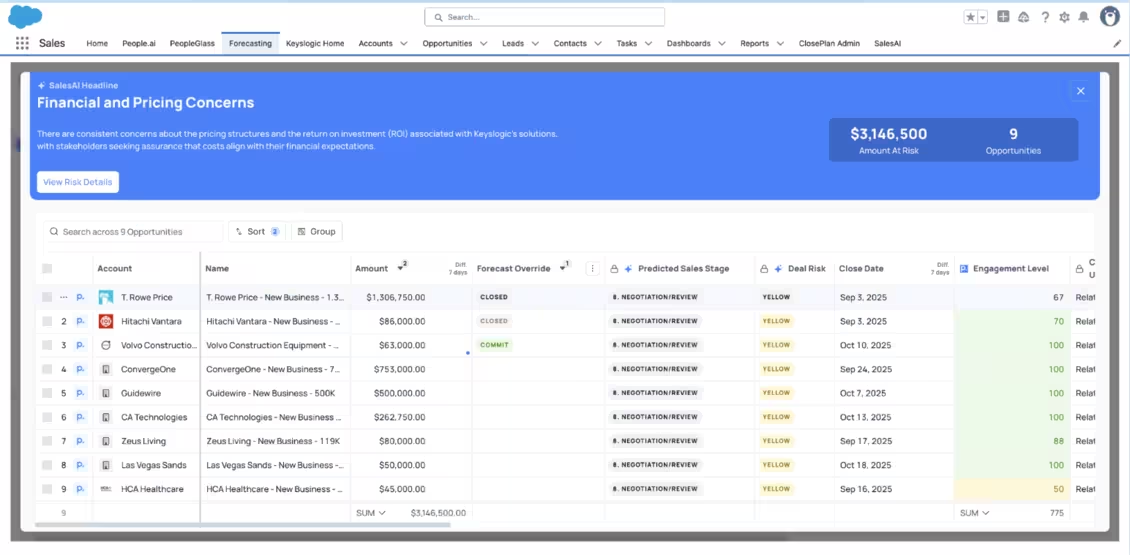
Bringing AI into opportunity reviews strips out bias, exposing the real story behind each deal. When everyone has a clearer picture of what’s actually happening, everyone works far more efficiently and effectively.

Clean Data Unlocks AI Insights

Here’s one thing I’ve learned the hard way: garbage in, chaos out.  Messy data doesn’t just confuse AI. It sends it – and, in turn, you – in the wrong direction. 

That’s why it’s critical to use a tool that automatically captures activity data from multiple sources, then enriches and validates it to create a complete, accurate picture.

If you’re on the fence about bringing AI into your deal process, here’s my take: do it, but do it right. Automation is king, but pick the wrong tool and you’ll get faster, messier chaos instead of game-changing intelligence. 

With an AI-native platform, you get a combination of accurate data and AI insights that allow you to see deals, act on risks, and trust forecasts. Once you’ve experienced that level of clarity, going back to guesswork feels impossible.

Want to turn hidden risks into opportunities before they hit your forecast? See better forecasting in action.

As we try to grow revenue and scale our businesses, we often ask our teams to move faster, do more, and bring opportunities forward each quarter. That pressure can backfire, pushing sellers to stretch themselves thin chasing every shiny opportunity. 

Balancing speed with focus is a constant tug-of-war, and without clear visibility, it’s easy for deals to slip through the cracks. That’s where AI makes a difference, giving you the clarity to manage both risk and opportunity effectively.

The Real Risks Are Quiet

Pipeline risk is sneaky, lurking where dashboards can’t see. It hides in small behaviors: a key stakeholder suddenly stops responding, approvals get delayed, or a promised demo never happens. These patterns don’t make headlines, but they quietly shape outcomes.

I’ve seen it in countless forecast calls: leaders ask, “Where’s the risk? What’s blocking this deal?” and week after week, you get the same vague answers. By the time trouble surfaces, the deal is already slipping through your fingers. 

I still remember the first time AI surfaced a deal my team felt great about, purely because someone on the prospect side said, “We’ll need to RFP this.” One line in a transcript. It wasn’t a new risk. It had been there for weeks. We just weren’t listening for it.

When Visibility Fails, the Forecast Suffers 

It’s no wonder such signals get overlooked. 

Every sales organization has its playbook – a grid of sales stages with entrance and exit criteria, tasks to complete, stakeholders to meet, case studies to share, and assessments to deliver. The list of required activities is enormous, and the details can be overwhelming.

Then come one-on-ones. A manager might be staring at 56 criteria on the grid while trying to work through 13 opportunities with a rep in one meeting. No human brain can juggle that many details in real time. Be honest: are you really surprised when opportunities and risks get missed?

Now imagine a dashboard where AI summarizes all your quarter’s opportunities. You can: 

  • Filter for best-case deals
  • Check whether each one is in the right stage
  • See if any early-stage opportunities actually meet exit criteria for committed deals

How many times have you needed an extra $100K or $200K late in the quarter, only to discover a deal sitting quietly in stage zero or one that could have counted? Having that visibility from day one completely changes the game because it paves the way for consistency.

Consistency Reduces Forecast Risk

I talk a lot about consistency. It’s not because I love process for process’ sake. But without consistency, you’re just presenting a dressed-up wish list as a forecast. That’s why forecasting is a gamble until you nail consistency

Consistency creates reliable data. When every deal actually meets stage criteria, the forecast becomes something you can act on, not just hope for. The problem is, most CRMs rely on sellers to maintain stage hygiene, and the system can’t enforce it on its own.

That’s where AI helps. It checks stage criteria, surfaces missing signals, and keeps deals aligned without turning leaders into micromanagers. When AI is reading meeting notes, emails, and engagement patterns, the things that used to slip past human review suddenly show up in plain sight. That gives you a chance to course-correct before revenue disappears.

Plus, with People.ai’s Headlines, you get alerted to early warning signs like stalled engagement, delayed approvals, or slipping close dates. This feature also quantifies the impact in real revenue terms. With a clear view of what’s off track, you can step in early, coach with purpose, and keep deals moving.

Bringing AI into opportunity reviews strips out bias, exposing the real story behind each deal. When everyone has a clearer picture of what’s actually happening, everyone works far more efficiently and effectively.

Clean Data Unlocks AI Insights

Here’s one thing I’ve learned the hard way: garbage in, chaos out.  Messy data doesn’t just confuse AI. It sends it – and, in turn, you – in the wrong direction. 

That’s why it’s critical to use a tool that automatically captures activity data from multiple sources, then enriches and validates it to create a complete, accurate picture.

If you’re on the fence about bringing AI into your deal process, here’s my take: do it, but do it right. Automation is king, but pick the wrong tool and you’ll get faster, messier chaos instead of game-changing intelligence. 

With an AI-native platform, you get a combination of accurate data and AI insights that allow you to see deals, act on risks, and trust forecasts. Once you’ve experienced that level of clarity, going back to guesswork feels impossible.

Want to turn hidden risks into opportunities before they hit your forecast? See better forecasting in action.

See What Your Pipeline Isn’t Saying

Learn all of the ways People.ai can  drive revenue growth for your business