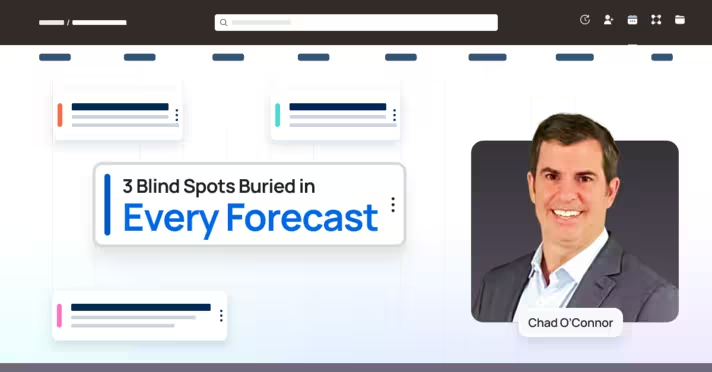
Sales forecasting often feels like a guessing game. Pressure to hit targets, shifting buyer priorities, and internal blind spots all combine to create a high-stakes environment where instinct too often wins over insight. But it doesn’t have to be that way.
In our latest AMA, sales powerhouse Samantha McKenna of Sam Sales and Chris Albro, CRO of People.ai, tackle the hard truths about forecasting—and share how to build a culture grounded in accuracy, transparency, and facts backed with data.
What's Really Behind Missed Forecasts
Despite the best intentions, most sales organizations are working with broken forecasting systems. Here’s what Sam and Chris unpack:
- Forecasting is too manual and most reps have never been properly trained.
- Inflated pipeline numbers create a false sense of security.
- Cultural fear prevents reps from flagging risks early.
- Cross-functional involvement (legal, procurement, CS) can make or break late-stage deals.
Your Top Questions Answered
During the AMA, sales leaders came ready with tough, honest questions—and Sam and Chris didn’t hold back. Below, we’ve recapped the top three audience questions, shared Sam and Chris’ expert takes, and added a few practical insights of our own to help you take action right away.
Q1: How do I create a forecast culture where folks feel safe telling the truth?
Sam: Set expectations early - integrity is valued more than hitting the number perfectly. Leaders must model transparency in their own forecasting. This builds safety and trust. Missing a number is tough, but getting blindsided is worse.
Extra insight: Forecasting culture doesn’t start with a spreadsheet - it starts with your 1:1s. Ask your reps not just what they’re forecasting but why. Dig into deal health, the “why now,” and qualification gaps. Reward transparency, not blind optimism. When reps know they can share the messy middle without penalty, you get better visibility and fewer surprises. Great forecasting isn’t about calling the number - it’s about creating a shared understanding of risk and truth. That starts with consistent coaching conversations grounded in curiosity, not pressure.
Q2: Where do you start with forecasting as an early-stage founder selling to medium/large companies?
Sam: Focus first on survival - keep your revenue close and build your runway. Sit on it, build with it, and forecast like your company depends on it - because it does. Before you start scaling GTM, your forecast isn’t just a number - it’s your roadmap to responsible growth.
Extra Insight: As a founder, you have direct visibility into buyer behavior. Use it. Document trends, track objections and identify what helps you close deals. Use this information to build your early forecast framework.
Q3: Why is forecasting so painful?
Chris: Forecasting is painful because reps are often piecing it together from scattered, incomplete data. Instead of working with a clear picture, they’re forced to build forecasts from fragments - emails here, call notes there, and scattered CRM updates. This lack of visibility leads to inconsistent narratives, missed risks, and inaccurate numbers. It’s not just market unpredictability - it’s the absence of unified , real time data that turns forecasting into a guessing game.
Extra Insight: Fix the inputs to fix the forecast using data-driven processes. That means better qualification, cleaner pipeline data, and training reps to think like revenue managers—not just closers.
Want More? Watch the Full AMA On-Demand
If you’re a sales leader, founder, or front-line rep trying to make sense of forecasts that never quite hit the mark, you’re not alone - and this conversation is your reset button. The full AMA video is packed with even more raw truth, tactical advice, and sales wisdom you’ll want to take notes on. From multi-threading secrets to how leaders unintentionally wreck forecast culture - it’s all there.